Tempo Fitness · UX Research & Product Design · Feb-May 2022
Tempo Duet
Role: UX Researcher & Designer
Team: 5 researchers/designers
Deliverables: Concept proposal, design narratives
Overview
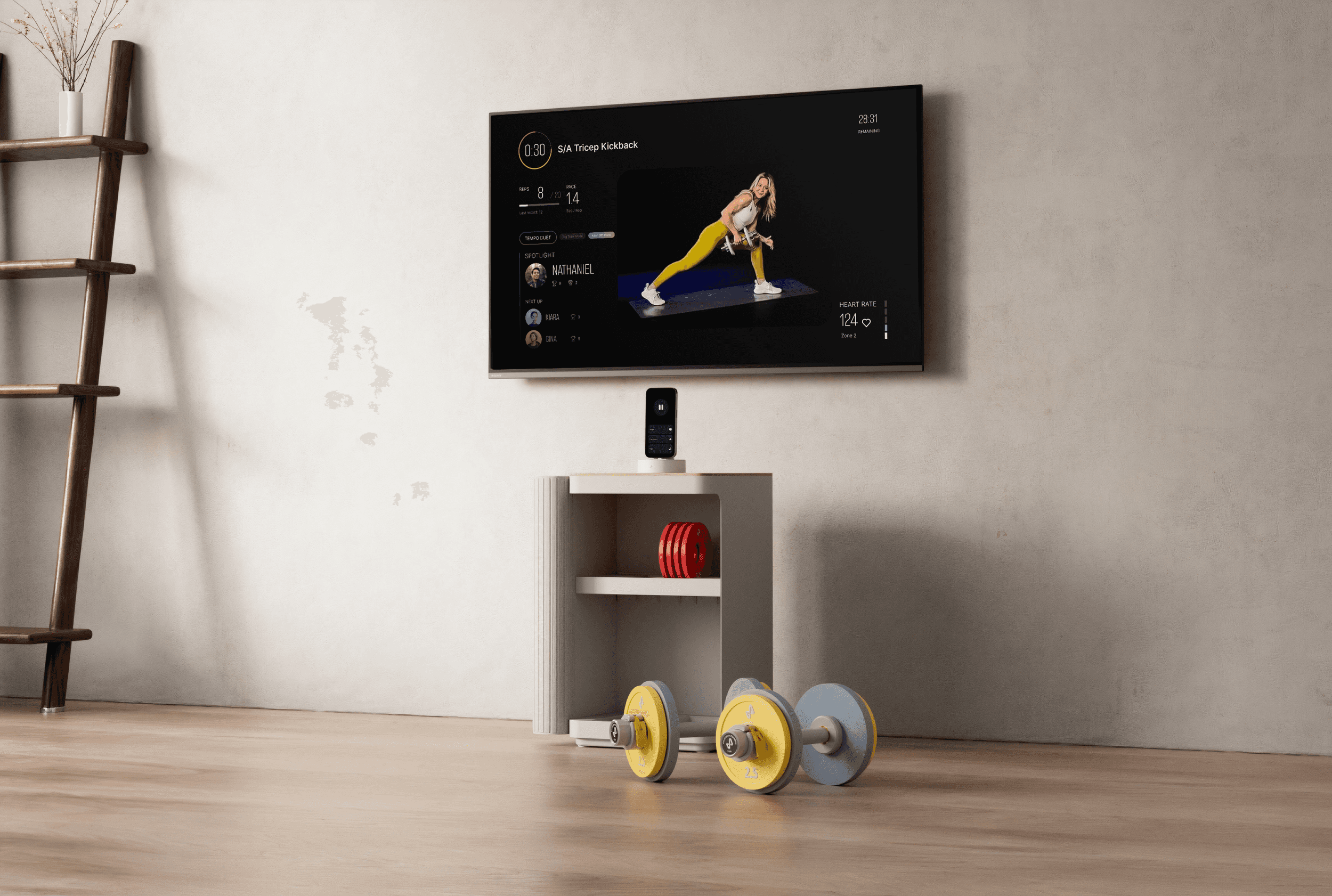
Tempo Fitness makes smart at-home strength training equipment. Their Tempo Move product – a compact weight system with real-time form feedback powered by computer vision – was gaining traction, but the company wanted to know:
How might we design new user experiences to increase Tempo's acquisition and engagement among young adults in the U.S.?

Working out with Tempo Move
As a contracted UX research consultant on a 5-person team, I contributed across every stage of the project: survey design, in-person user studies, a 3-week longitudinal group study, participatory design sessions, ideation, and final delivery. I also led the final sprint, keeping the team on track to meet deliverables within our timeline.
Our work resulted in:
A validated social feature concept: Tempo Duet, well-received by Tempo's design team and later validated in an independent survey they conducted
A new user segment identified as a promising growth opportunity, giving Tempo a concrete direction for acquisition beyond their existing audience
Research that reframed the core problem: the barrier wasn't the product, it was perceived value – and social features were the most feasible path to closing that gap within Tempo's existing technology
Part 1: Research
We opened with a qualitative survey to understand how our target demographic approaches fitness: what methods they use, what motivates them, and where the Tempo Move would fit in relation to their existing habits.
We mapped the most common workout methods onto a matrix to identify where Tempo sat relative to competitors and free alternatives mentioned in the survey.
From there, we moved onto in-person studies on campus, where students who had never used a Tempo product could try the Tempo Move for 15 minutes and give us real first impressions.
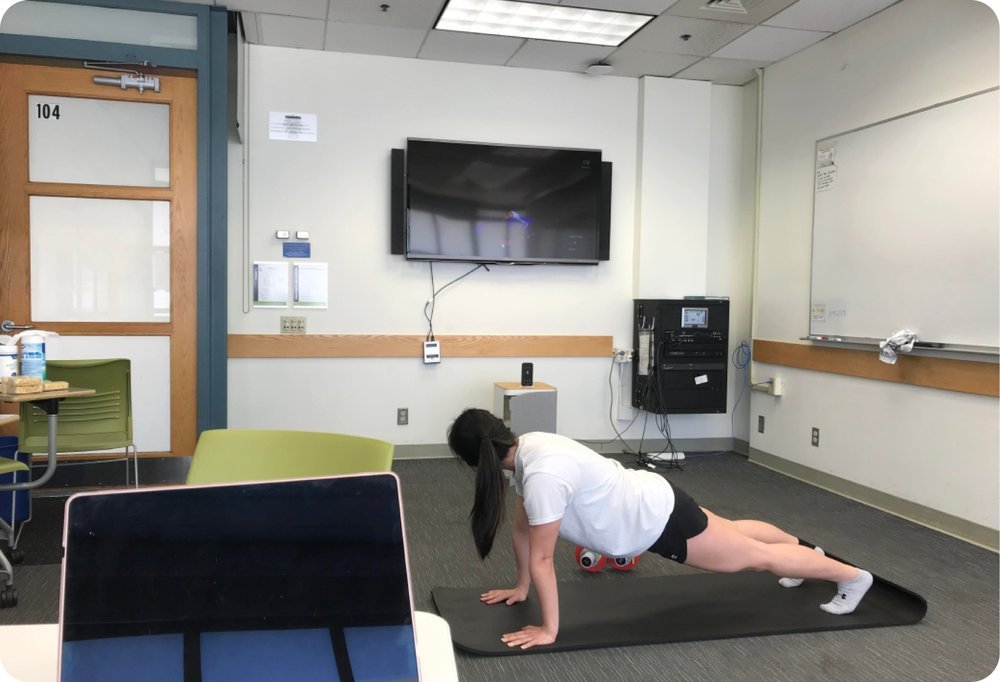
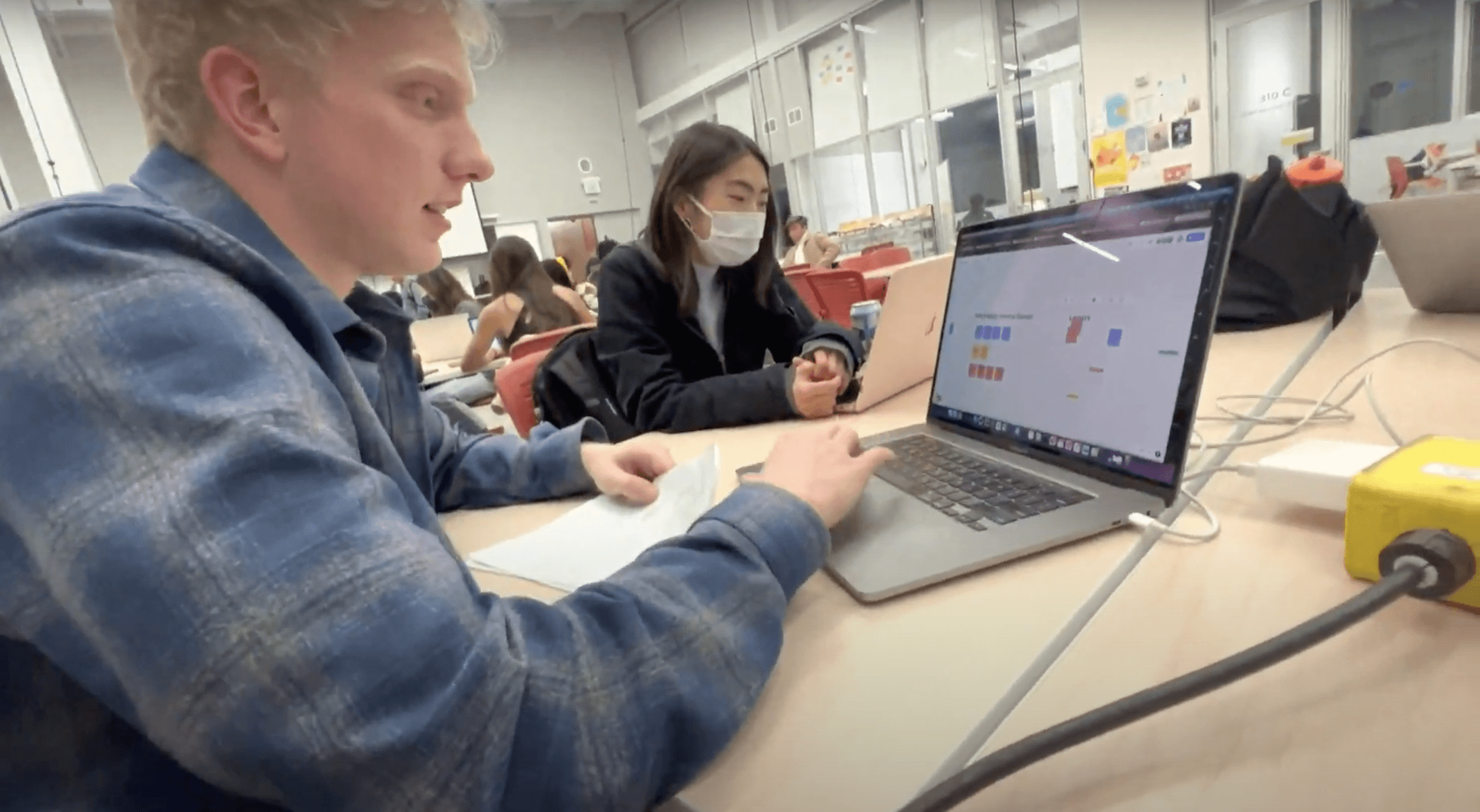
A student trialing the Tempo Move
What we learned
A positive reception
Users loved the engaging instructors, the approachability for beginners, and Tempo's form-correction technology – a clear advantage over free alternatives like YouTube workouts or the gym.
Price vs. perceived value
Every participant balked at the price. With an upfront cost of $495 and a $39 monthly subscription, the Tempo Move simply wasn't worth it for the demographic we were studying.
Journey + goal = motivation
Users gain the most motivation through a combination of process (working out with friends) and outcome (a satisfying sense of self-improvement).
The ideal workout method is affordable, motivating, and highly personalized.
The Tempo Move nailed 2 out of 3.
Finding the gap: what could make it worth it?
To identify opportunities, we compared Tempo against direct competitors (Peloton, Mirror, Hydrow, Ergatta, Tonal) and cheaper alternatives, reviewing product specs and user reviews to understand what made each product distinct.
One gap stood out clearly: while many competitors had social features (leaderboards, virtual friend lists), none replicated the feel of actually working out with someone. No shared accountability. No real-time presence. Nothing close to the energy of a group fitness class or gym session with a friend.
Given that our users' motivation was tied to both the social process of working out and the goals they achieved, this felt like a genuine opportunity – not just a feature gap, but a potential answer to the price question. If the Tempo Move could offer something no competitor did, it might justify the cost for our demographic.
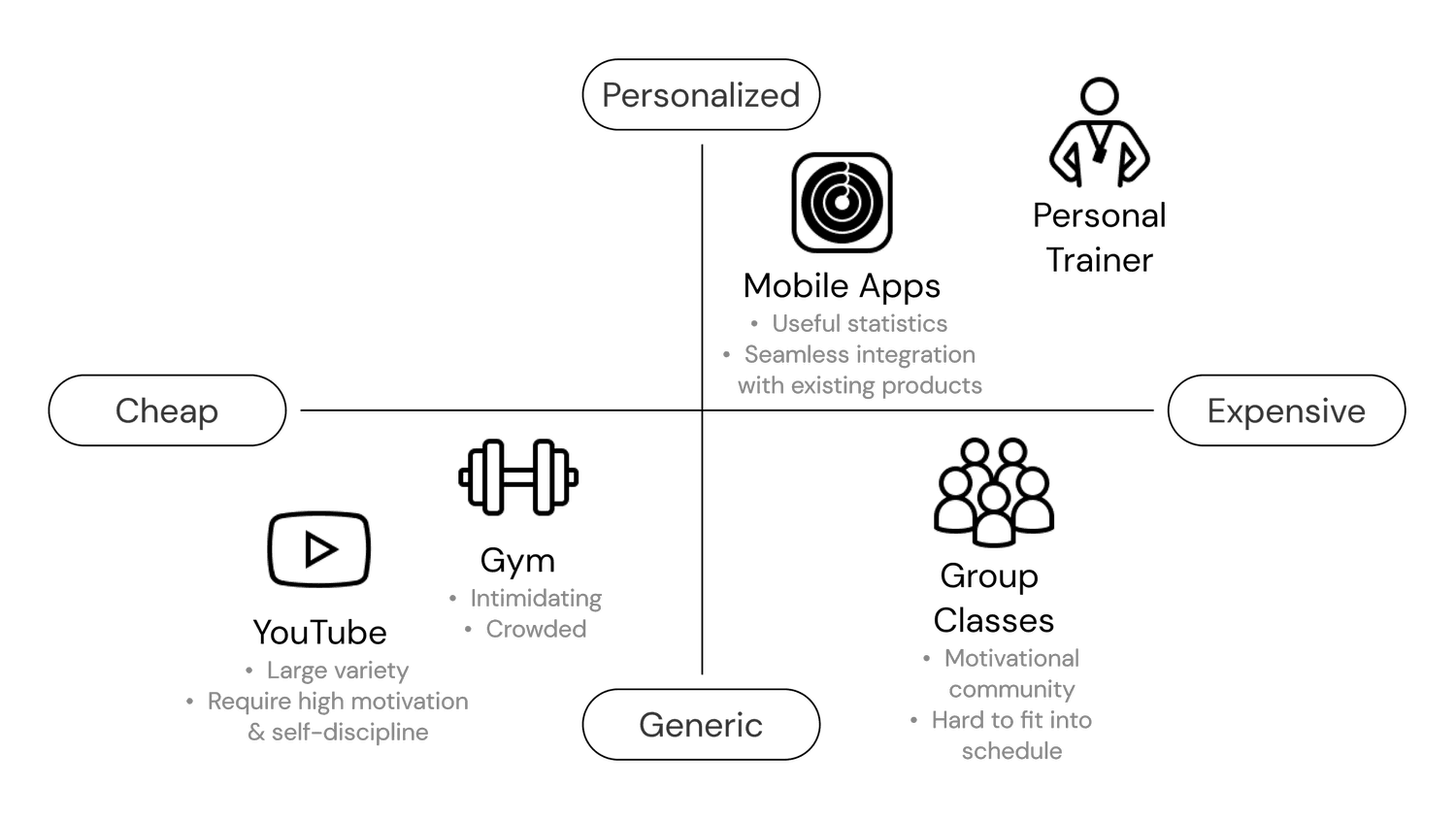
Matrix Plotting Tempo & its Competitors
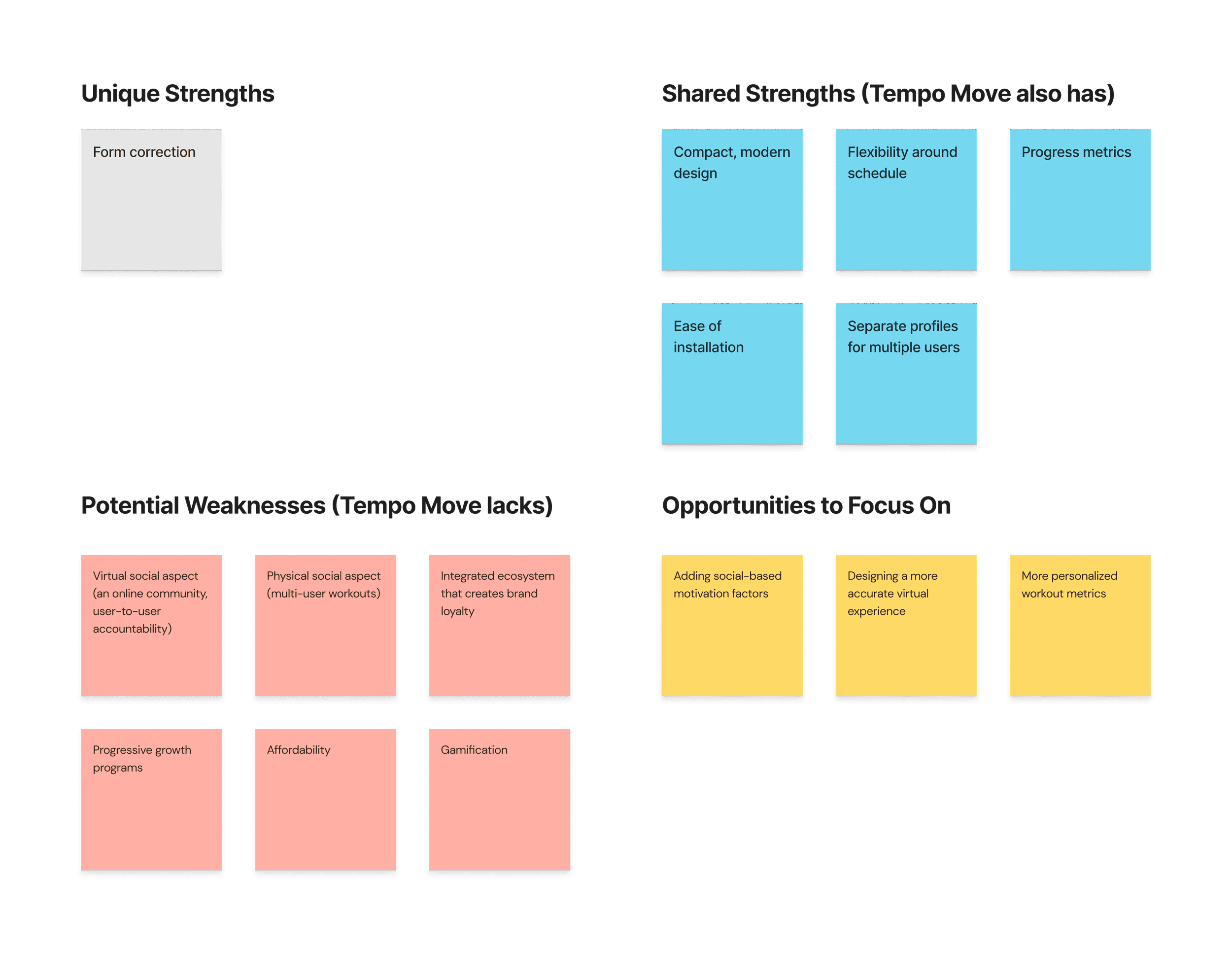
Swot analysis of Tempo Move
Testing the hypothesis: a 3-week group study
To explore the social direction, we designed a longitudinal study: Tempo Moves were installed in three households with 2-4 residents each. All residents were asked to use the product multiple times a week and complete post-workout questionnaires for three weeks. At the end, we facilitated group interviews and participatory design activities with each household.
Participatory activities
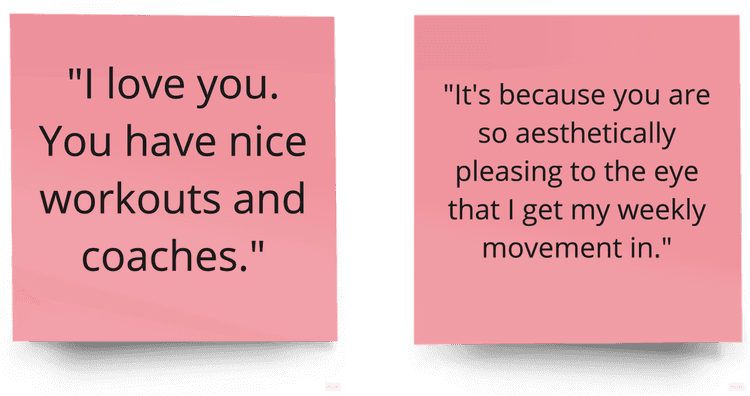

Love/hate letters
To surface expectations and emotional responses to the product.
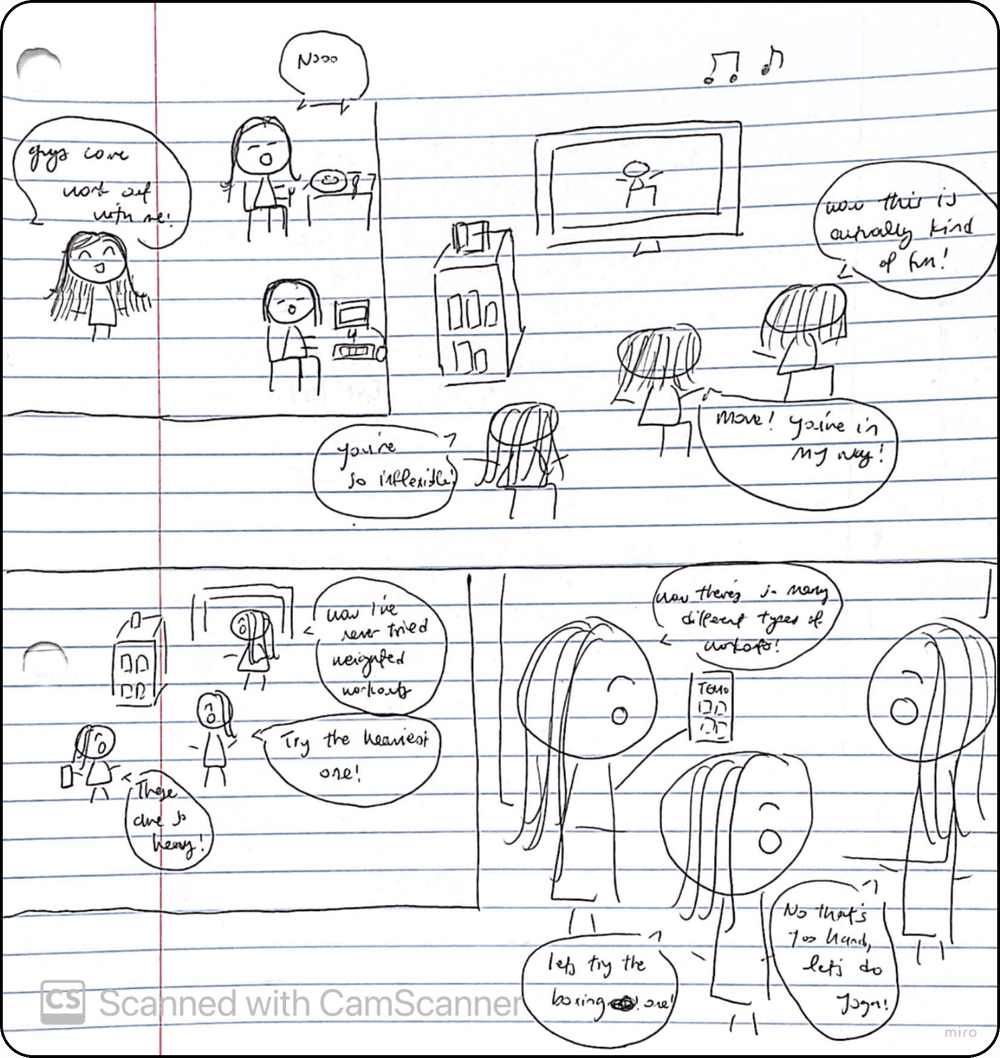
Storyboarding
"Draw your ideal group Tempo Move experience" to visualize how users imagined using the product.
Feature ranking
To gauge desirability of concepts we'd ideated beforehand.
What we found
Working out with others in a shared space created a natural sense of accountability – seeing a housemate use the Tempo Move motivated others to work out.
Members wanted to work out together but couldn't – Tempo's technology didn't support it. Some tried anyway, even knowing their stats weren't being tracked.
Most storyboards depicted cooperative experiences; some showed competitive ones. Very few involved sharing personal achievements with a broader community. Users wanted social with people they knew, not strangers.
Most imagined in-person sessions, but one depicted a remote experience – an early signal that asynchronous social features might also have a place.
"If I didn't see him I would be less encouraged... seeing him made me want to work out." – Study participant
The group study confirmed what the initial research hinted at: the social dimension was the missing piece. And more importantly, it was a gap no competitor had meaningfully addressed.
Part 2: Defining the Users
From our research, we developed two personas representing a spectrum of potential and existing users, including different motivations, workout experience levels, and desired social dynamics.

Angelica, the newbie motivated by community
Intimidated by the gym, Angelica is considering the Tempo Move as a way to exercise on her own schedule without the social pressure of a public space. She loves group workout classes with friends but needs the flexibility to fit workouts into her day.
What she wants most: a cooperative experience that feels like doing something with someone, even at home.

Rachel, the intermediate user motivated by competition
Rachel has been using the Tempo Move for a few months and is steadily increasing her weights. Her concern isn't price or social connection, it's longevity. She worries about outgrowing the product before she's gotten her money's worth.
What she wants most: a competitive challenge that keeps the experience feeling fresh as she improves.
Part 3: Ideation
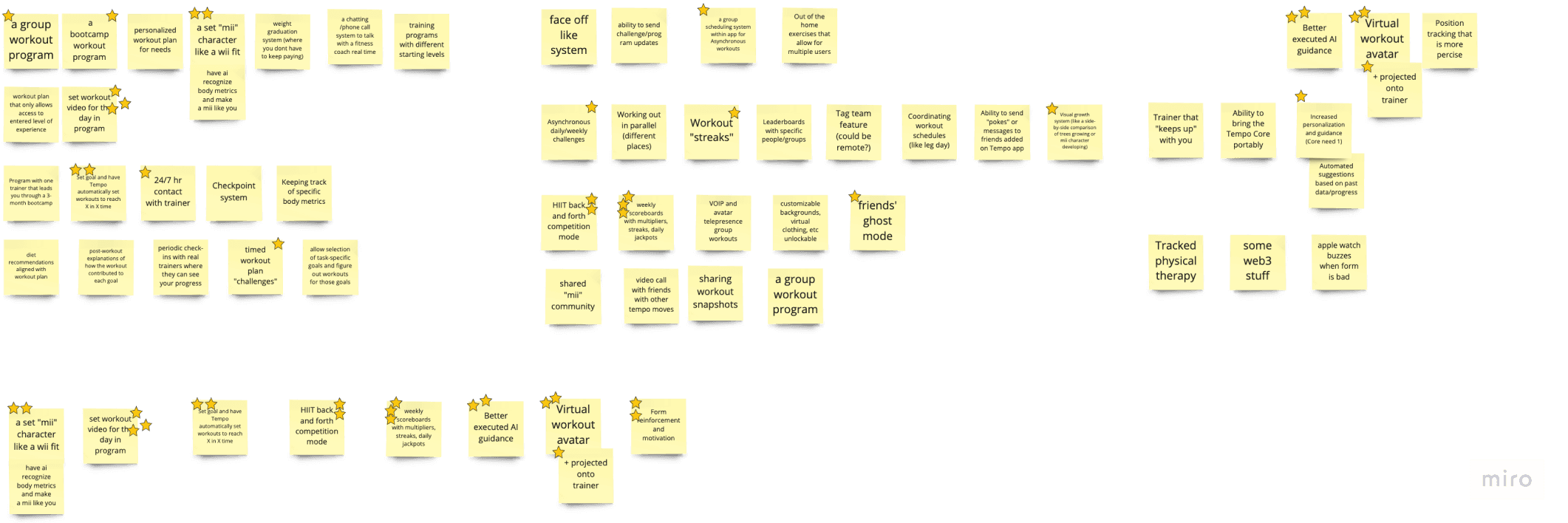
Free ideation
Tempo Duet
Our Proposal
The final concept: Tempo Duet, a social workout mode that supports both cooperative and competitive experiences between two users – in the same space or remotely, in real time or asynchronously.
Tag Team Mode for Angelica
Users take turns on the mat during a shared workout, cooperating to complete it together. One person works while the other rests and watches, then they switch. Both individual and combined team statistics are tracked, making the shared experience feel meaningful even within Tempo's existing hardware infrastructure with no additional equipment required.
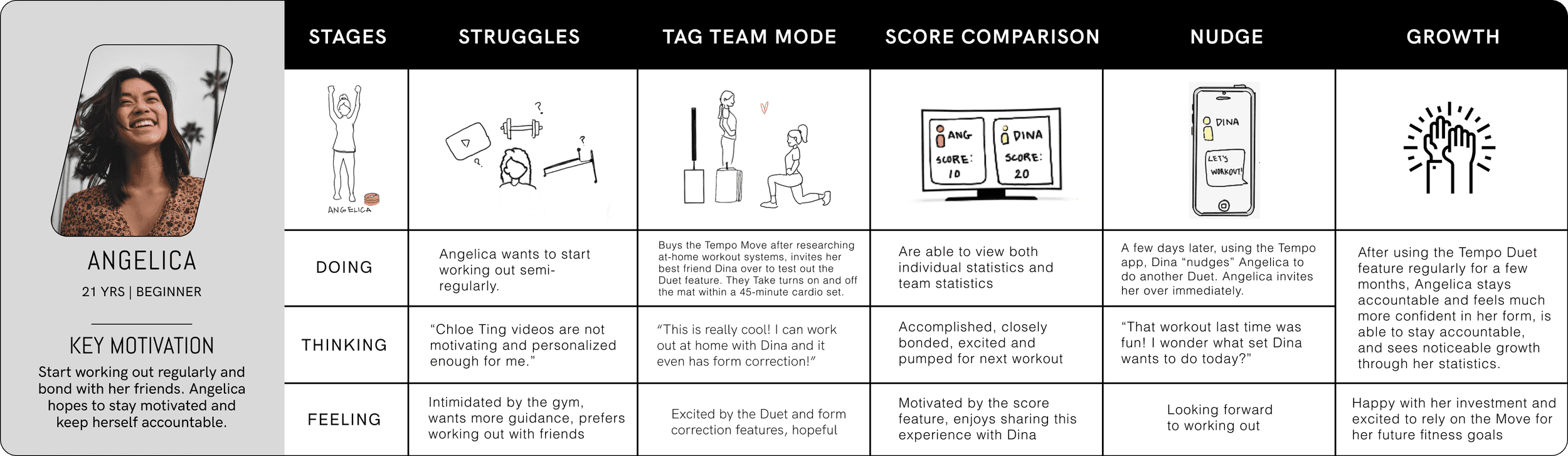
Angelica's Narrative
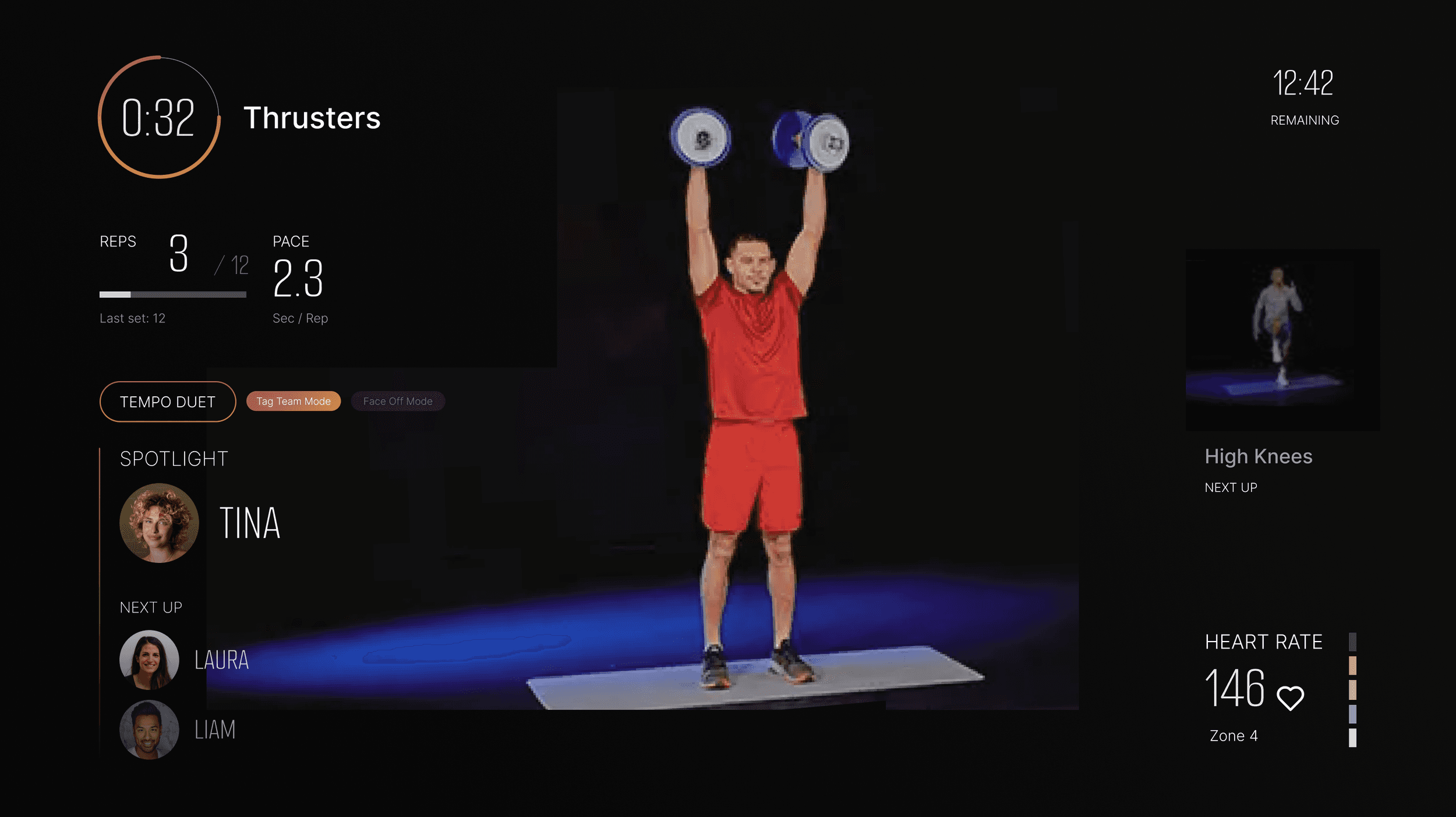
Mockup of Tag Team Mode Interface
Face-Off Mode for Rachel
Users also alternate on the mat, but the goal is to one-up each other rather than cooperate. The competitive edge: a ghost mode that lets a user see a visual "ghost" of their friend completing the same workout after finishing asynchronously. You don't need to be in the same room, or even working out at the same time, to compete.
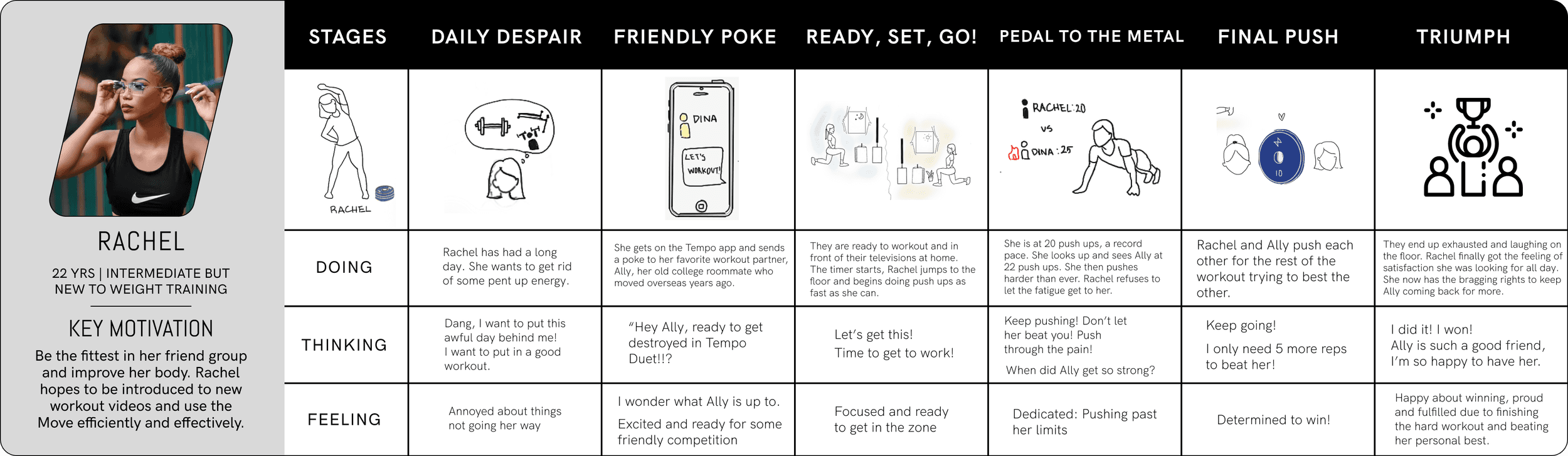
Rachel's Narrative
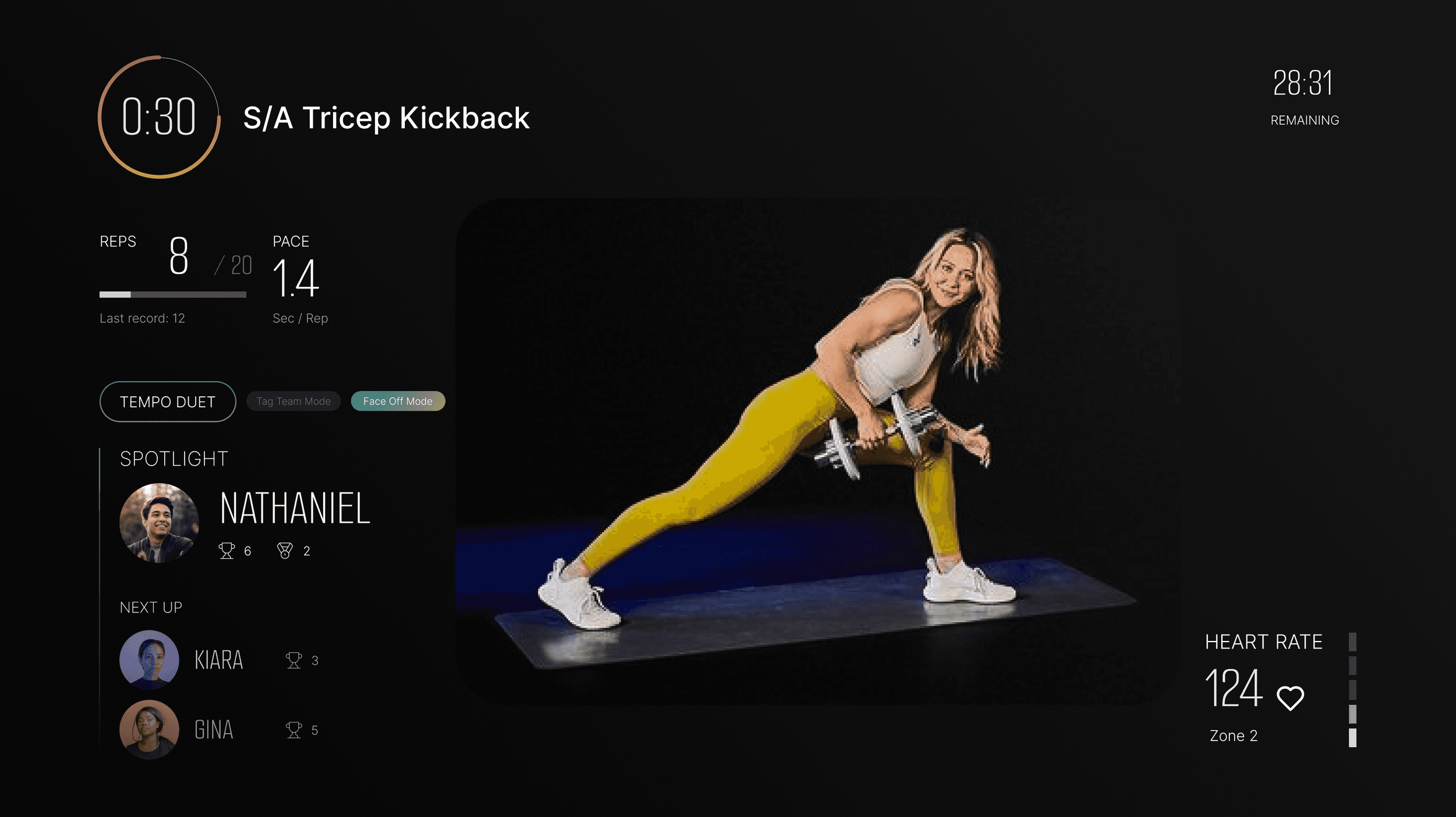
Mockup of Face-Off Mode Interface
Outcome
We presented Tempo Duet to Tempo Fitness's design team as visual narratives for each persona. The concepts were well-received and later validated in a survey sent by Tempo – confirmation that the social direction resonated with real users, not just our study participants.
The work also had a secondary impact: our research helped Tempo gain a deeper understanding of a new potential user segment that the company identified as a promising growth opportunity.
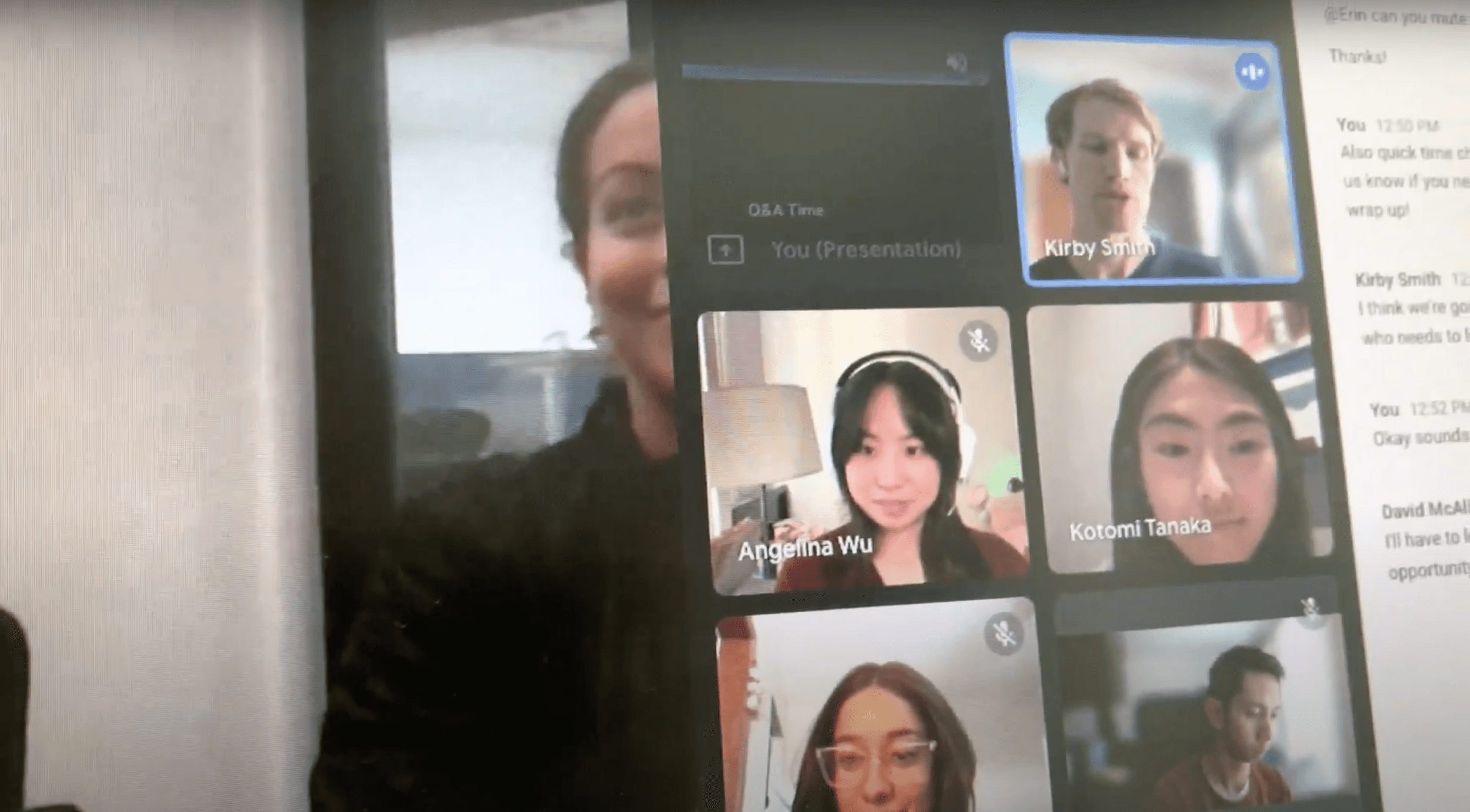
Presenting Tempo Duet to the Tempo team
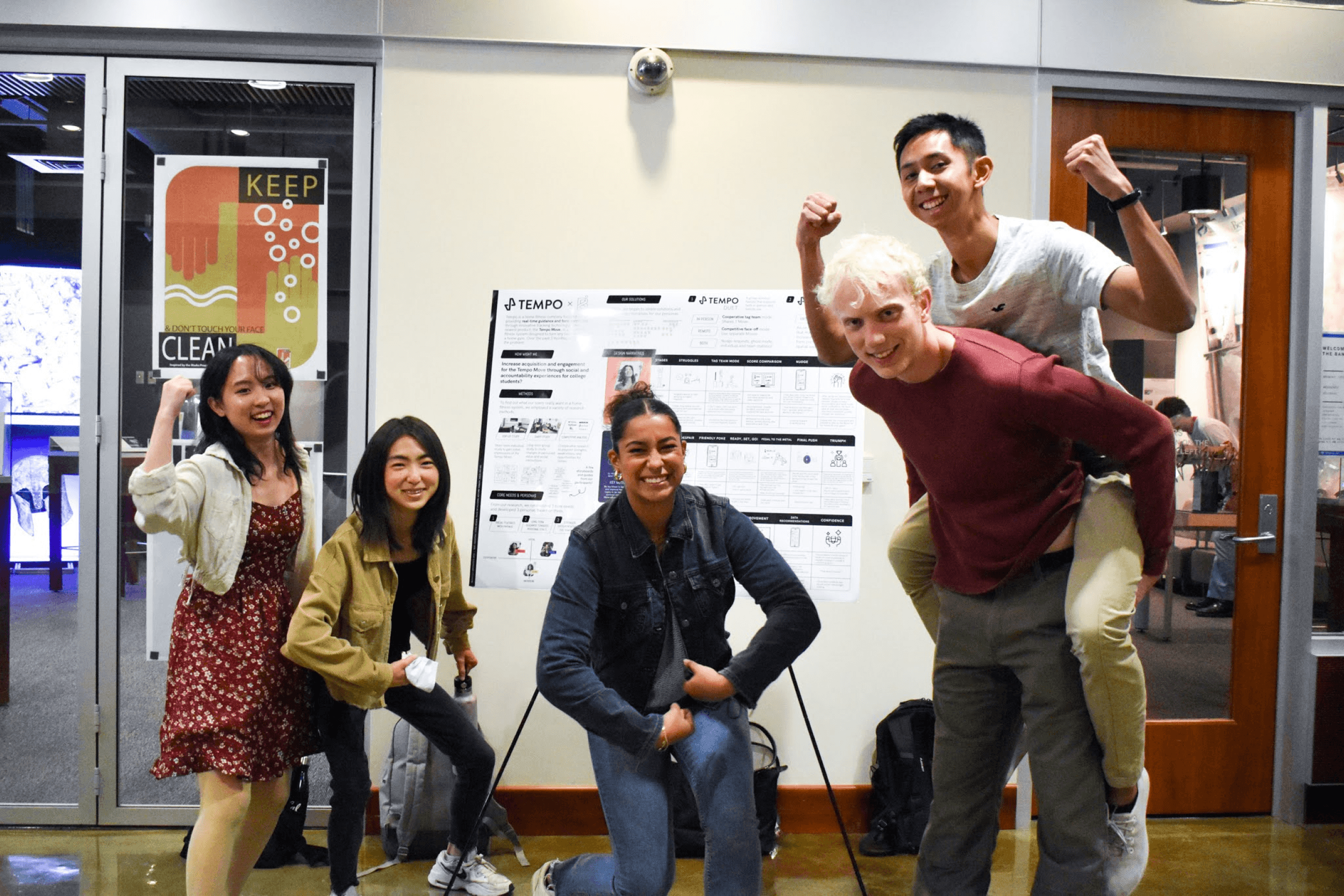
Our showcase on campus
"Angelina did an exceptional job conducting UX research and developing innovative design concepts for important unmet needs in our user journey. Her work helped us understand new approaches for creating a social workout experience and helped us gain a deeper understanding of a new potential user segment."
– Kirby Smith, Lead UX Researcher, Tempo Fitness
What I Learned
Dig into business goals earlier
We had a clear user research mandate but less visibility into Tempo's broader business situation – where they were struggling, what their growth targets looked like, which user segments they were prioritizing, etc. Starting with sharper business questions would have given us a more effective starting point and made our final recommendations easier to connect to outcomes the company cared about.
Protect time for testing
We spent the majority of the engagement on research, which produced genuine insight and gave our concepts a strong foundation. But we didn't have time to test and iterate on the final Tempo Duet concepts before presenting them. Some concept validation happened during the group interviews, but it wasn't sufficient. If I were running this project again, I'd build testing into the timeline as a non-negotiable milestone rather than something to attempt if time allowed. Both of these lessons have shaped how I approach projects since.