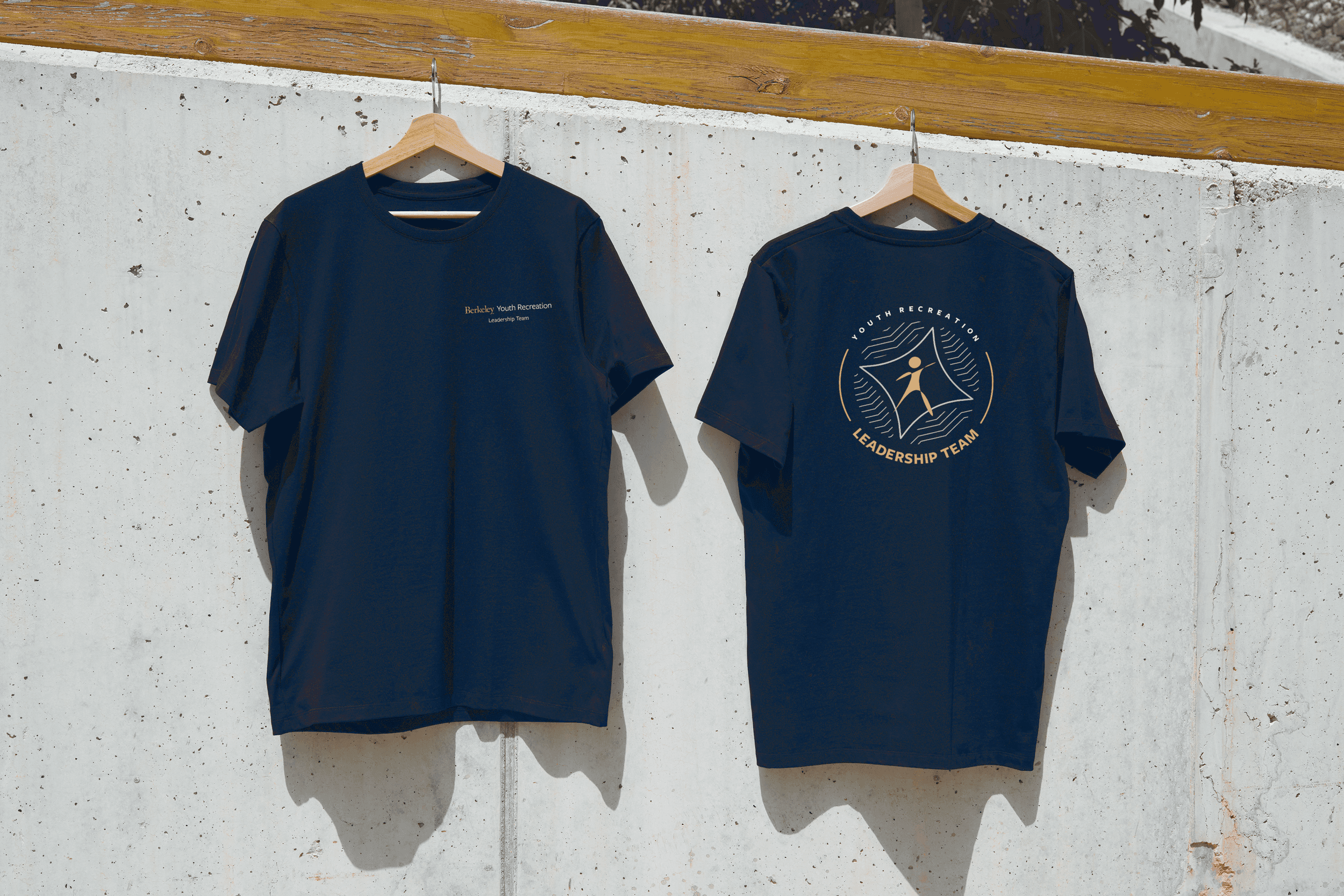
UC Berkeley Recreation & Wellbeing · Brand Identity & Design Systems · 2024
UC Berkeley Youth Recreation Rebrand
Role: Brand Designer (sole designer)
Deliverables: Logo system, pattern system, character illustrations, brand guidelines
Outcome: Presented as a case study to incoming new hires
Overview
Formerly Cal Youth Programs & Camps, Youth Recreation is a year-round UC Berkeley program offering sports classes across skill levels to kids from infancy through age 18. When I joined Berkeley Recreation & Wellbeing, the Youth Recreation division had grown without a guiding visual system. Each program that lived under it had accumulated its own look over time, and nothing felt like it belonged to the same division.
What started as a request for a single logo for staff use evolved into something larger: a complete identity system that gave each program and its members a distinct sense of personality and belonging, while making it unmistakably clear they were all part of the same family.
"It'd be cool to not have to recycle what we get for summer year-round..."
– YouthRec director
The Problem
The original brief was narrow: design a circle logo for Youth Recreation staff, with an archery logo potentially to follow. But as I dug into the project, the real problem became clear.
Youth Recreation runs multiple distinct programs (martial arts, skateboarding, swimming, gymnastics, archery, and a variety afterschool program), each reaching different age groups, with different instructors, printed on different materials. The visual identity needed to do a lot of work: it had to be simple enough to screenprint on a shirt, versatile enough for digital and large-format print, and distinct enough that a parent or kid could tell which program they were looking at while still clearly belonging to one family.
A single logo wasn't really going to solve that. What the program needed was a system.
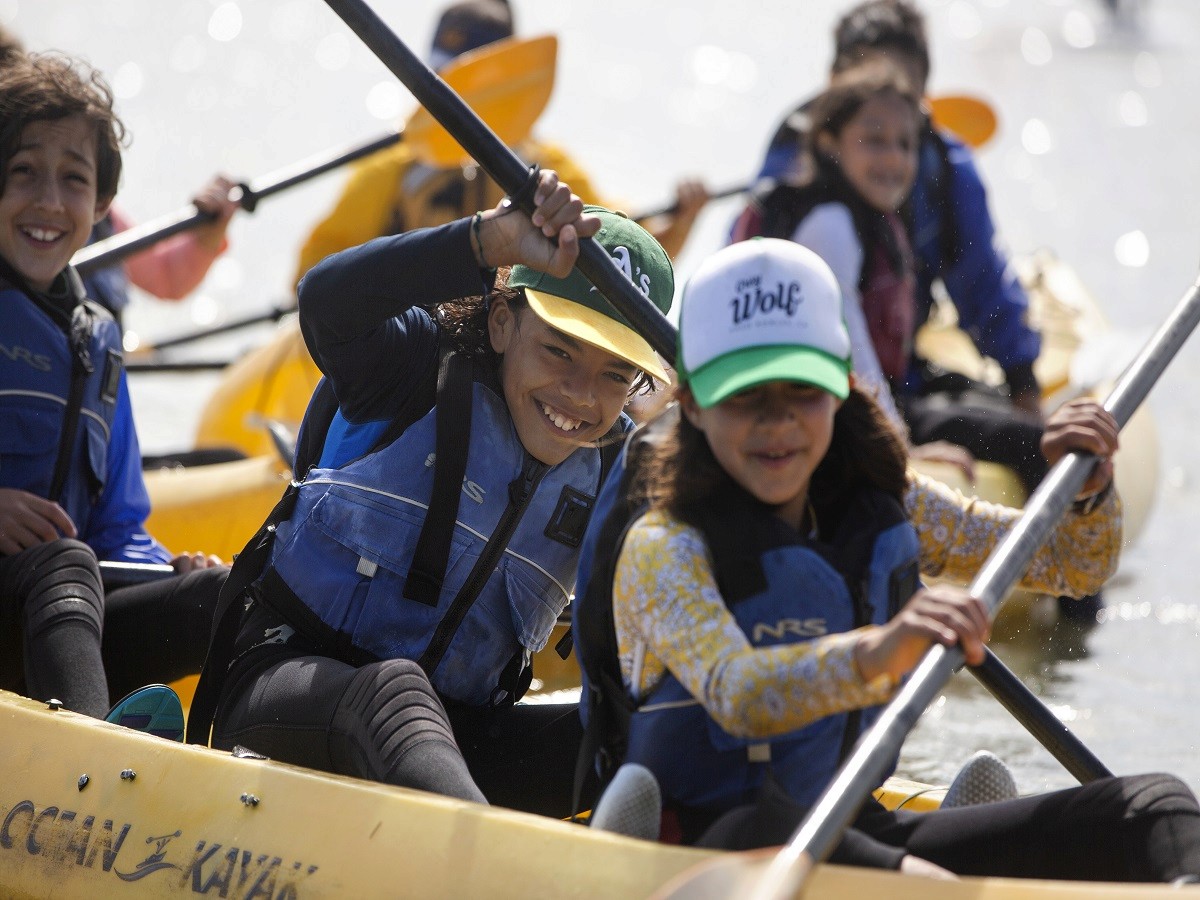
Summer Camps
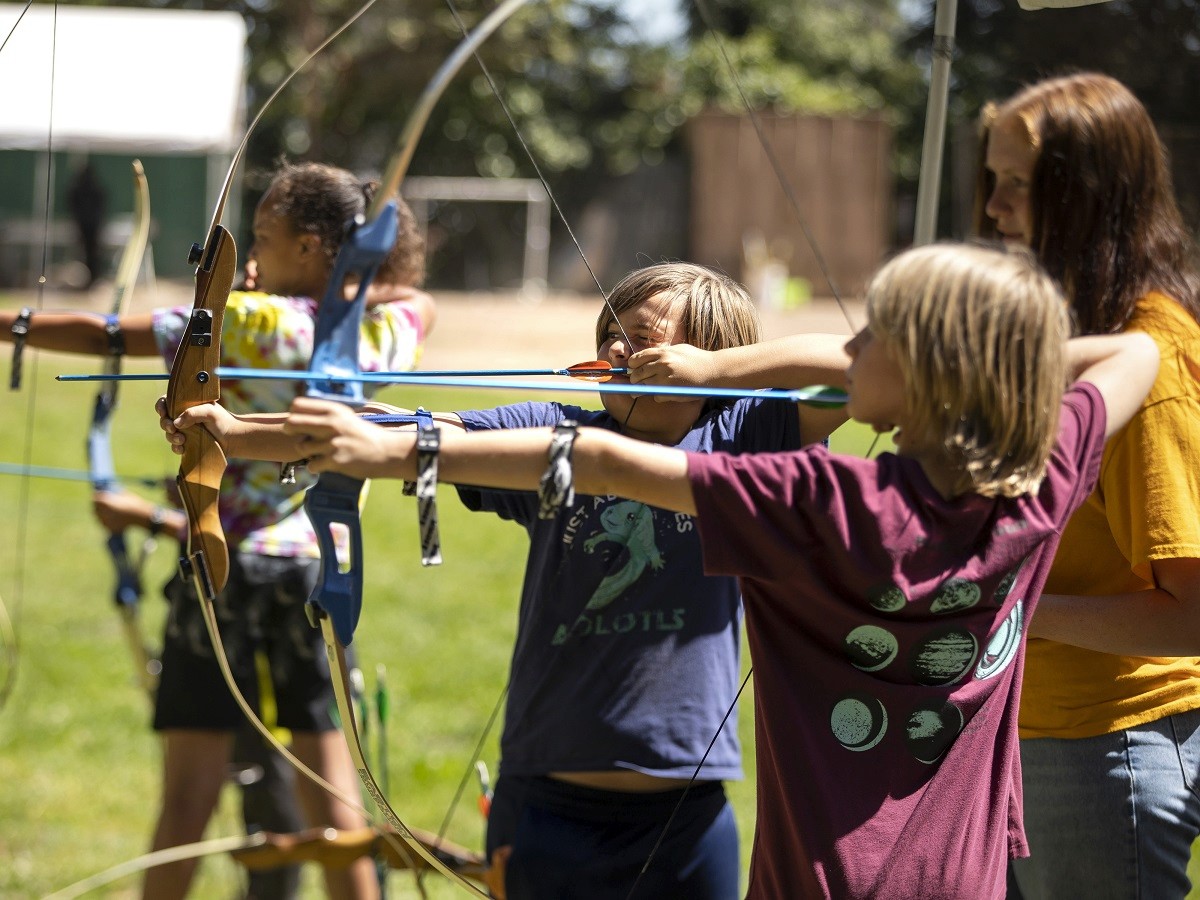
Year-Round Archery Program
Gathering Information
Before sketching anything, I mapped out two categories of requirements that would shape every decision: practical constraints and design goals.
Practical constraints
The designs would primarily be screenprinted on apparel, but needed to work across print (CMYK, spot printing) and digital formats.
Assets would be used by the Youth Recreation director and other RecWell designers, so I needed to deliver organized working files, vector formats, and guidelines for implementation.
The content had to be evergreen: program offerings might change over time, so the identity couldn't rely on specific sports that could be phased out.
The logo had to work in a circle format, consistent with Berkeley RecWell's existing visual language.
Design goals
Must be simple and versatile across multiple use cases and scales.
Must communicate what the Youth Recreation program is actually about: enthusiastic, challenging, and encouraging instruction for kids across age groups.
Program logos must each feel distinct while clearly belonging to a set.
Tone: vivid and energetic, with solid colors and fun shape language. Not too childish, not too serious.
I also took note of what the director had responded well to in my past work – designs for our Adventures and UVA Afterschool Program, both of which used simple, concrete motifs.
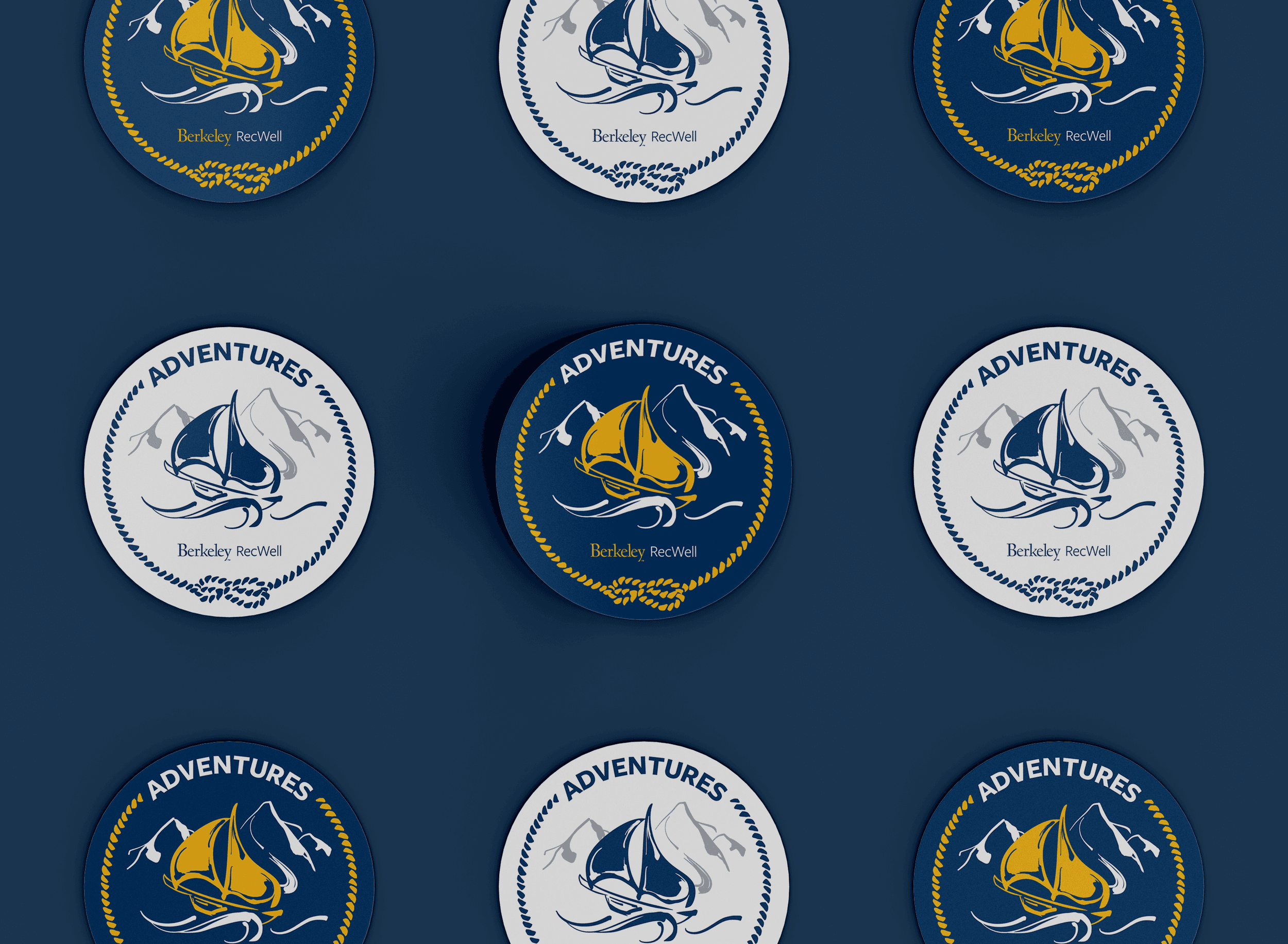
Adventures Circular Design

UVA Afterschool Program Logo
Exploring and Eliminating Concepts
With the constraints laid out, I put down as many ideas as possible before evaluating any of them. Three directions emerged as worth exploring further:
Concept 1: Combine physical elements from each sport
The first idea was to pull recognizable physical elements from each sport and combine them into a unified mark: a skateboard, a bow and arrow, a wave. It felt intuitive, but was not evergreen. If Youth Recreation added or dropped a program, the logo would need to be rebuilt from scratch. It also risked being too abstract – a half-pipe for skateboarding or a dojo for martial arts would overly confine the identity to a specific place, when one of the program's strengths is that the skills it teaches travel with the kids.
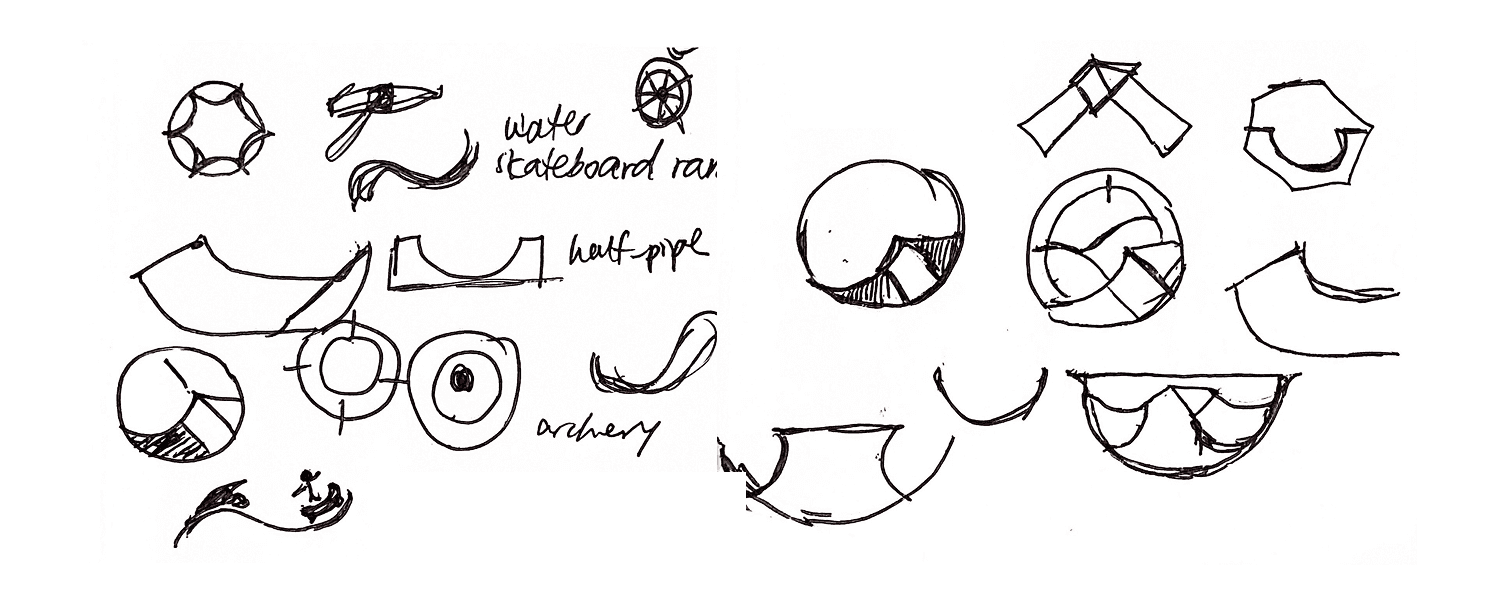
Sketches of Physical Elements & How they could be combined
Concept 2: Stacked program logos that form the main logo
The second concept explored whether individual program logos could be designed to overlay and combine into the Youth Recreation parent mark. Visually interesting, but it shared the same evergreen problem as the first – and introduced a new one. The resulting composition lacked a clear focal point, and the individual program marks didn't stand strongly on their own. A logo system where each piece only makes sense in relation to the others is fragile.
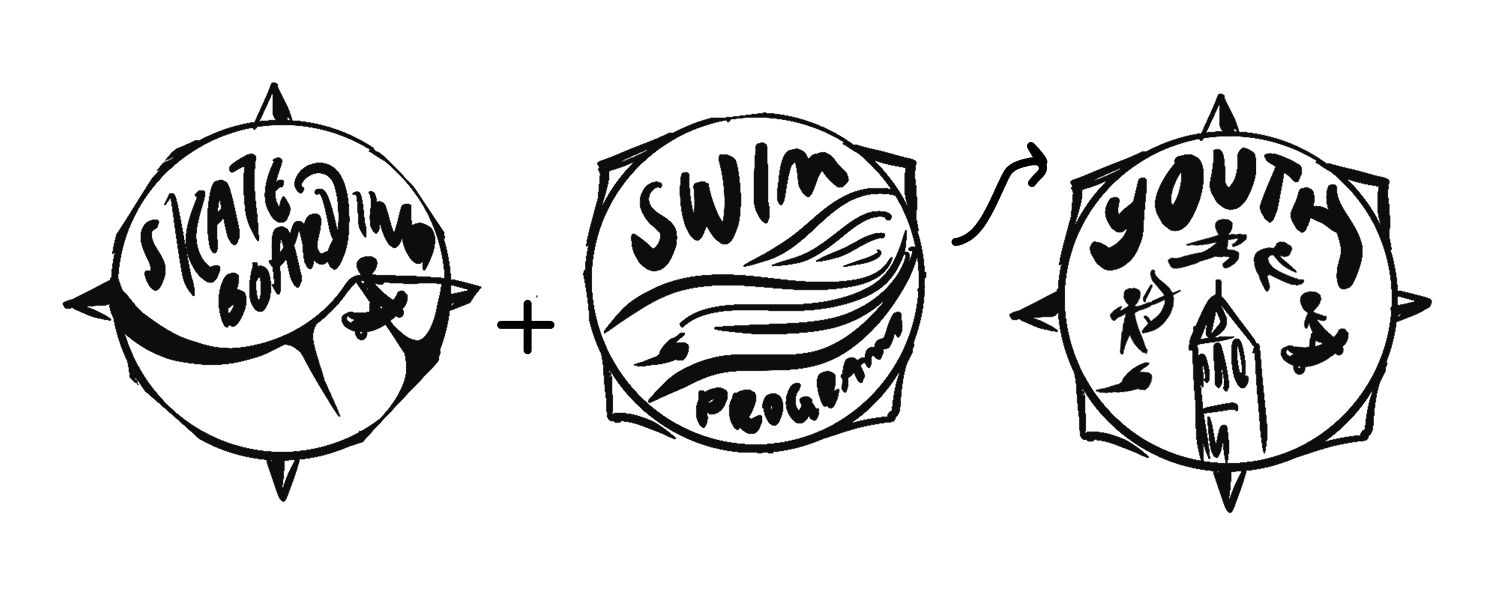
Explorations of stacking logomarks
Concept 3: Build off a unifying shape with per-program patterns
The third direction was the one that held up. Rather than trying to represent every sport literally, I looked for a symbol that could carry the meaning of the program as a whole and be adapted without breaking. I landed on the star and sparkle shape – a reference to Fiat Lux, UC Berkeley's motto – rotated to read as a compass arrow. It represented Youth Recreation as a place where each kid can grow and shine, and as an adventure to explore their interests and direction.
The compass arrow added an additional layer: a sense of movement and forward momentum, without being tied to any specific sport. Each program logo would be an adapted version of this primary shape, keeping the system coherent while giving each program visual room to breathe.
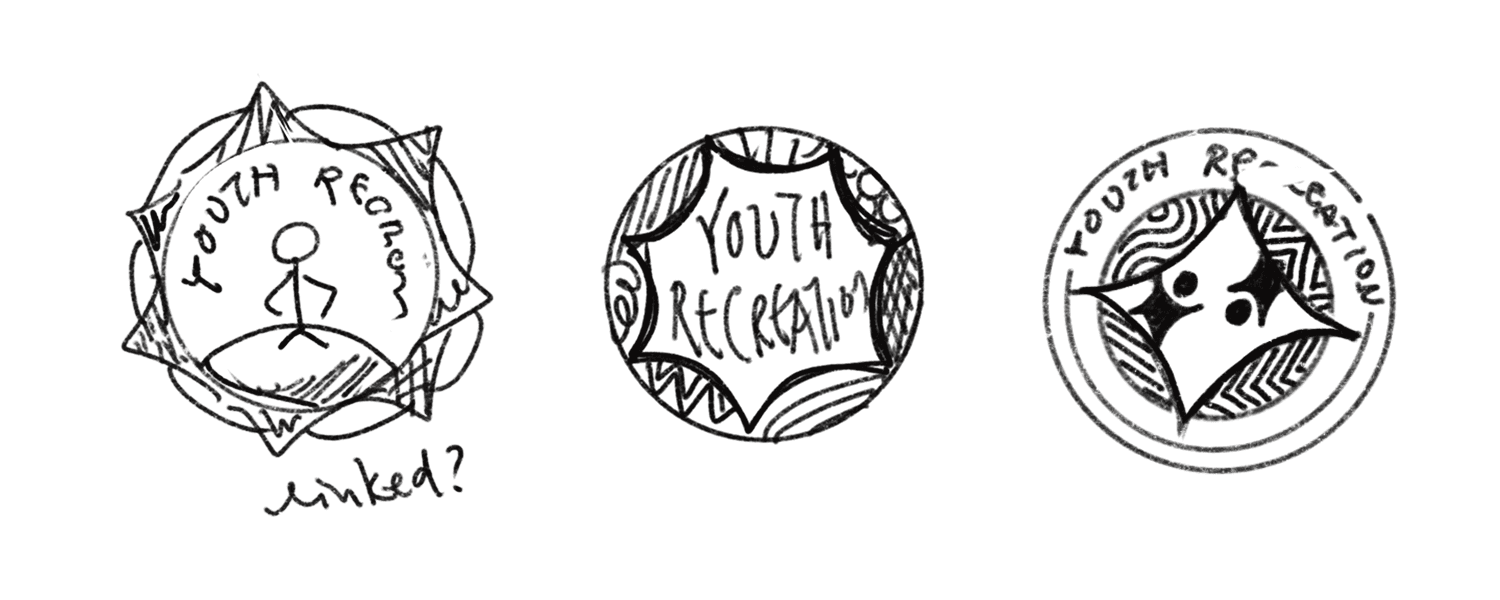
Sketches of building around primary shapes
The constraint that ruled out concepts 1 and 2 – the need for evergreen, sport-agnostic design – was the same constraint that made concept 3 work.
Final Designs
The logo system
The primary Youth Recreation logo is built around the 4-pointed star/sparkle shape representing Berkeley’s motto, “Fiat Lux” (let there be light), rotated to allude to a compass arrow. Each program logo is a variation of this primary mark, keeping the parent identity recognizable while differentiating by sport.
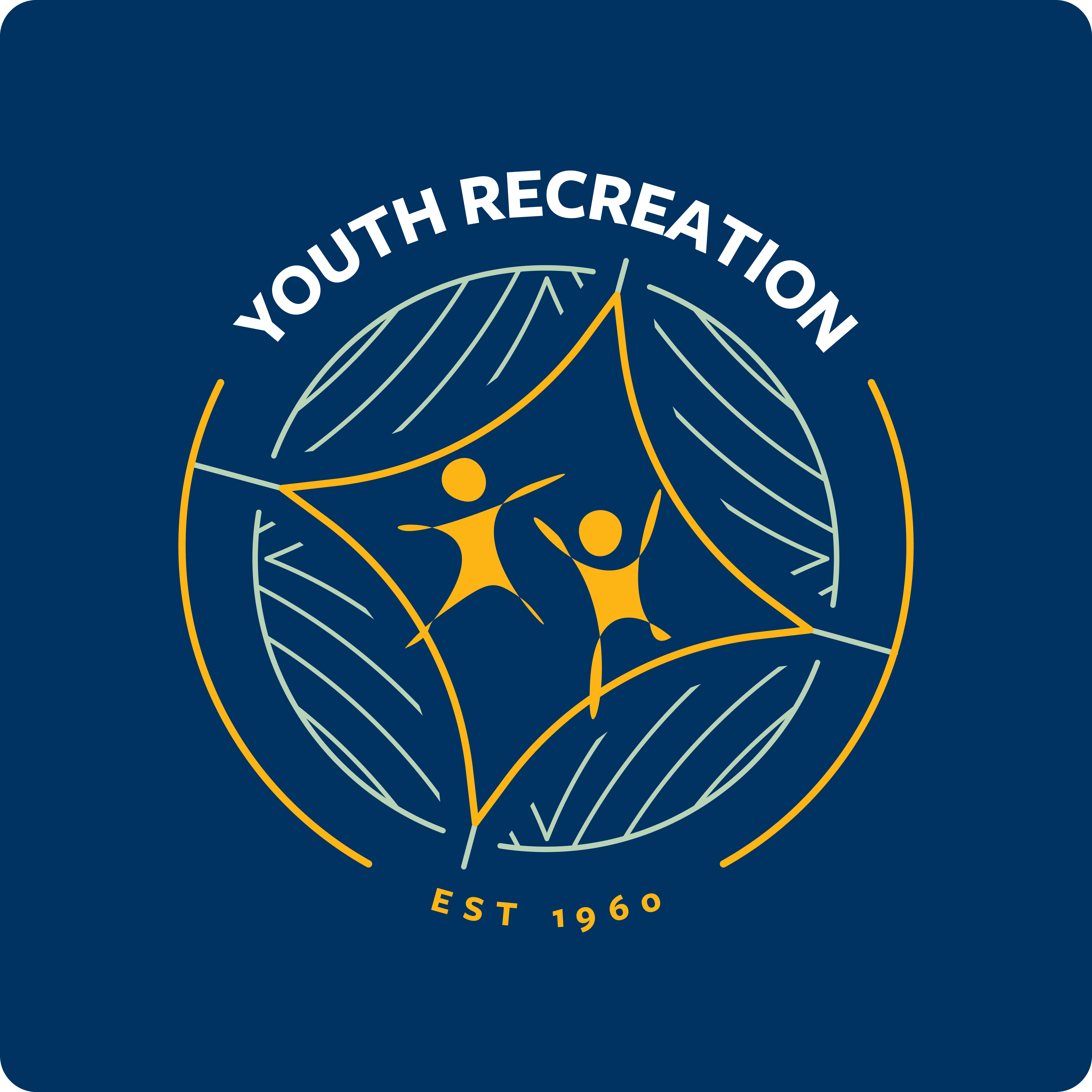
Primary Youth Recreation Logo
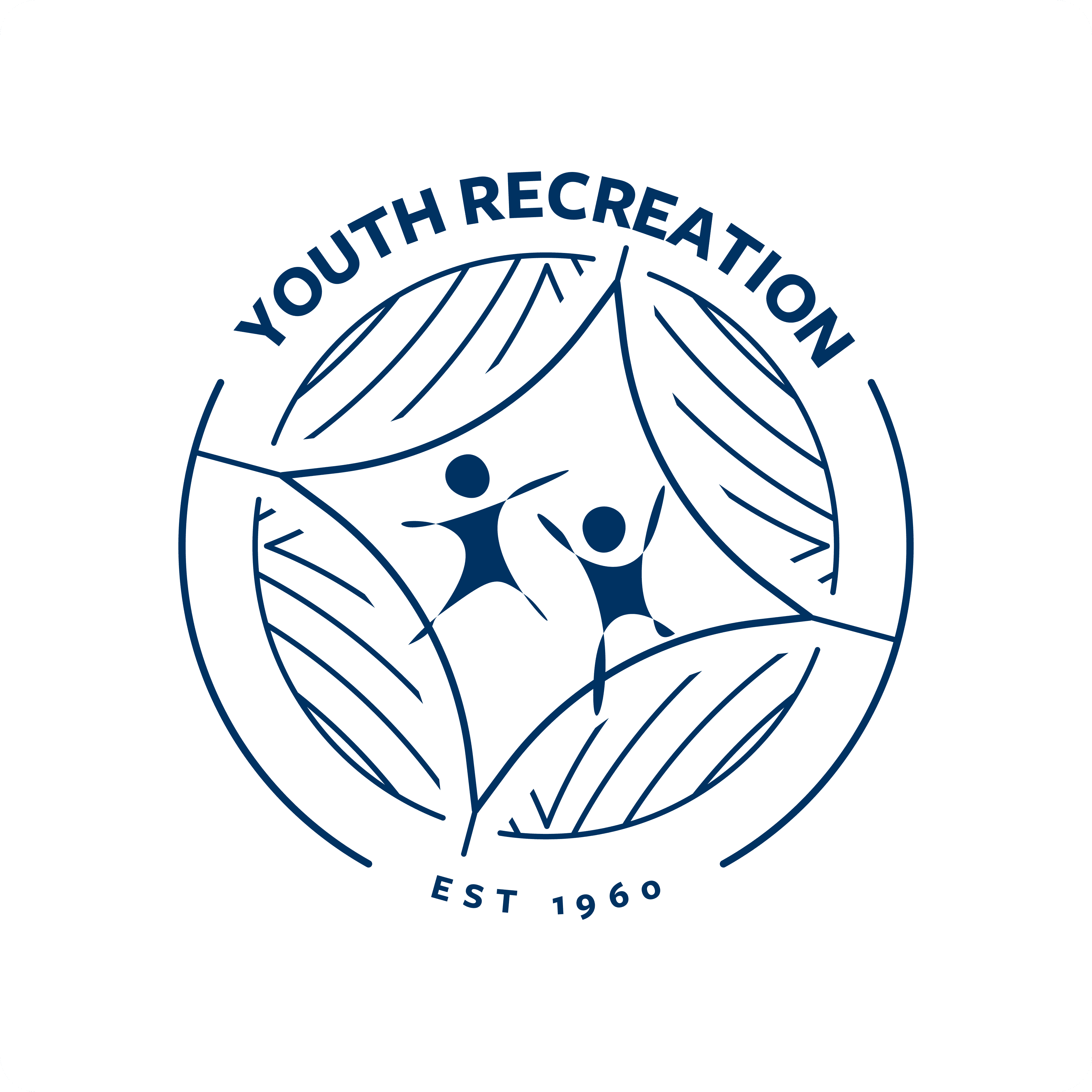
Monocolor Youth Recreation Logo
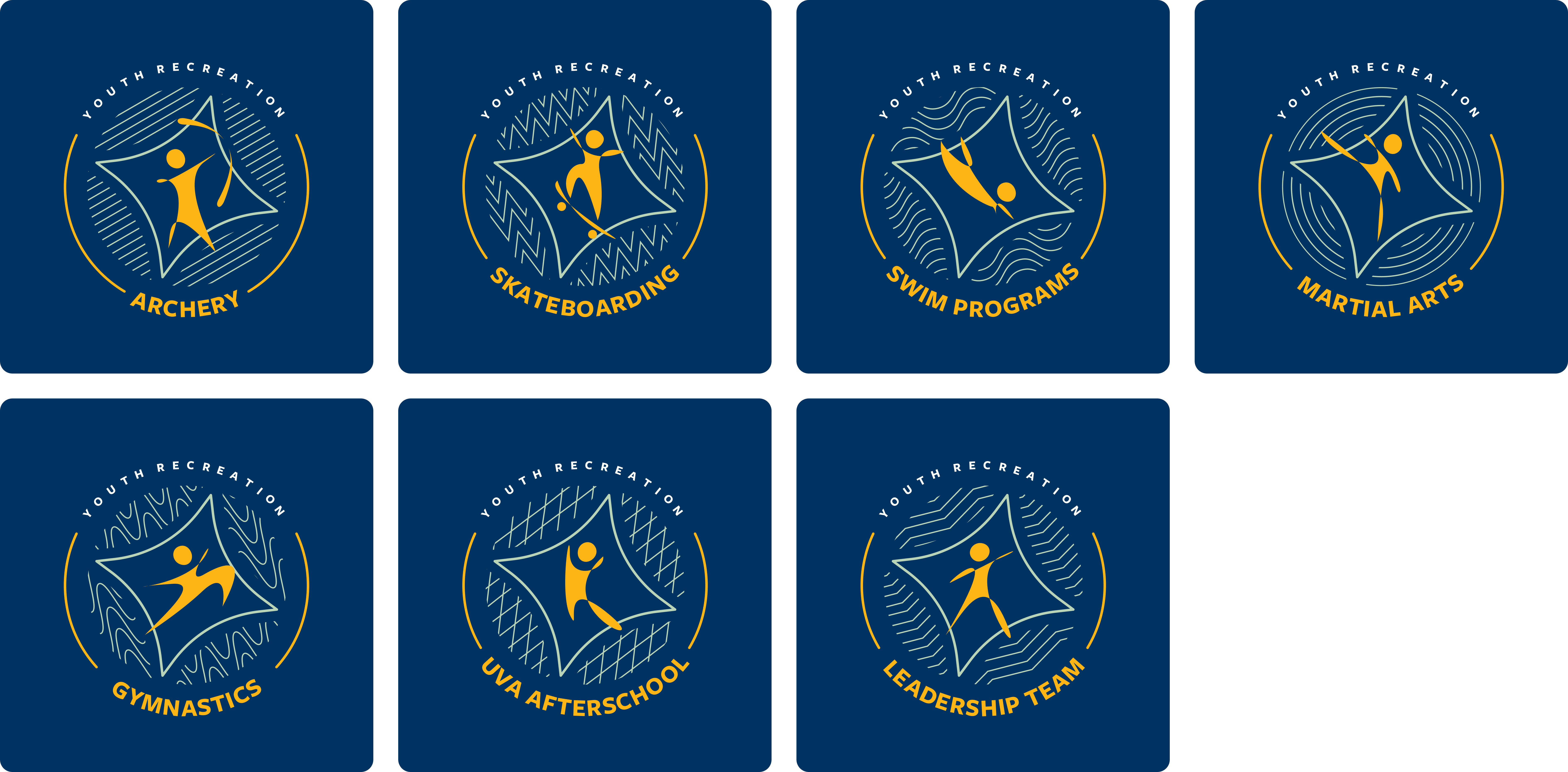
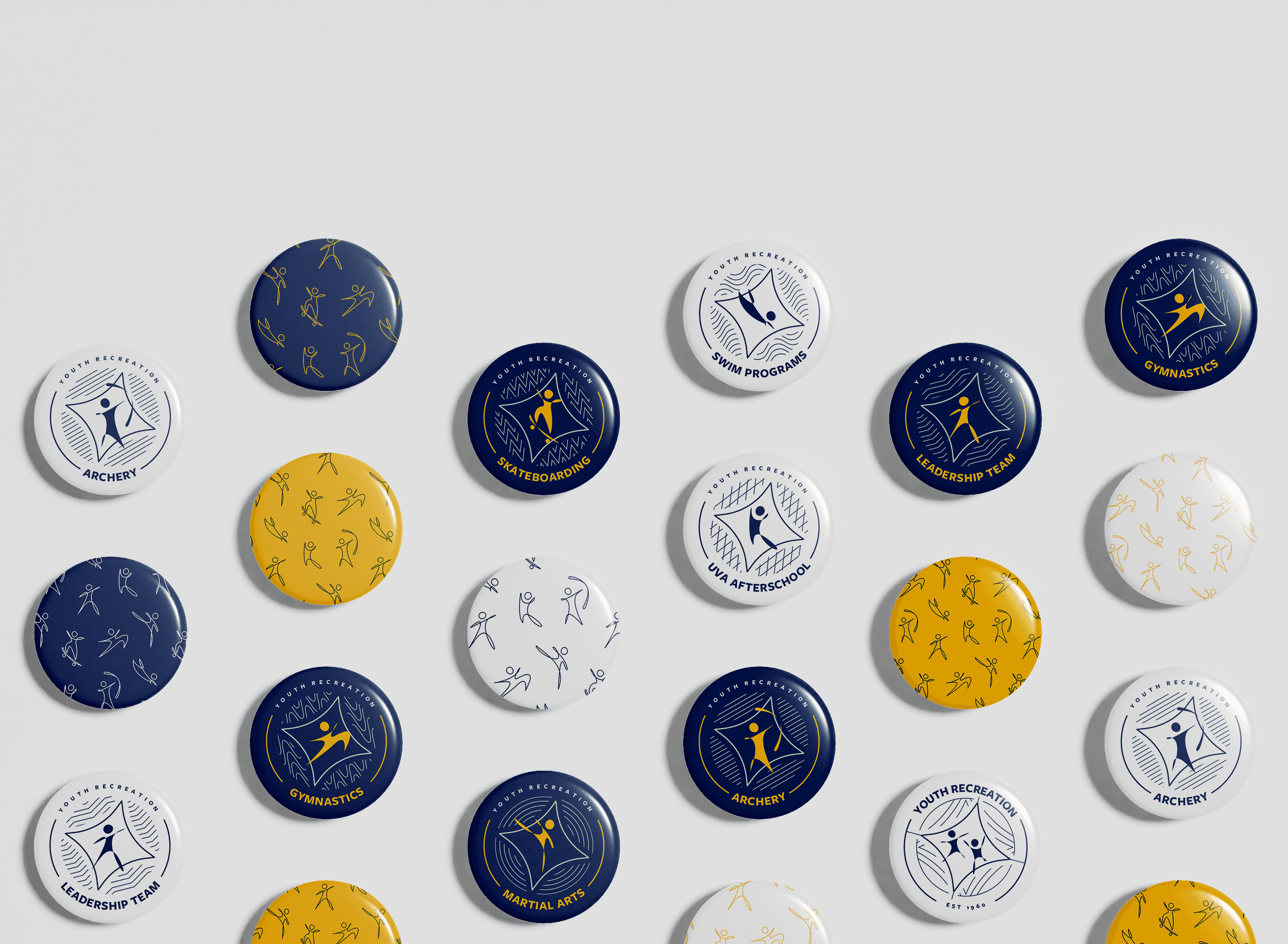
Individual Sports Program Logos
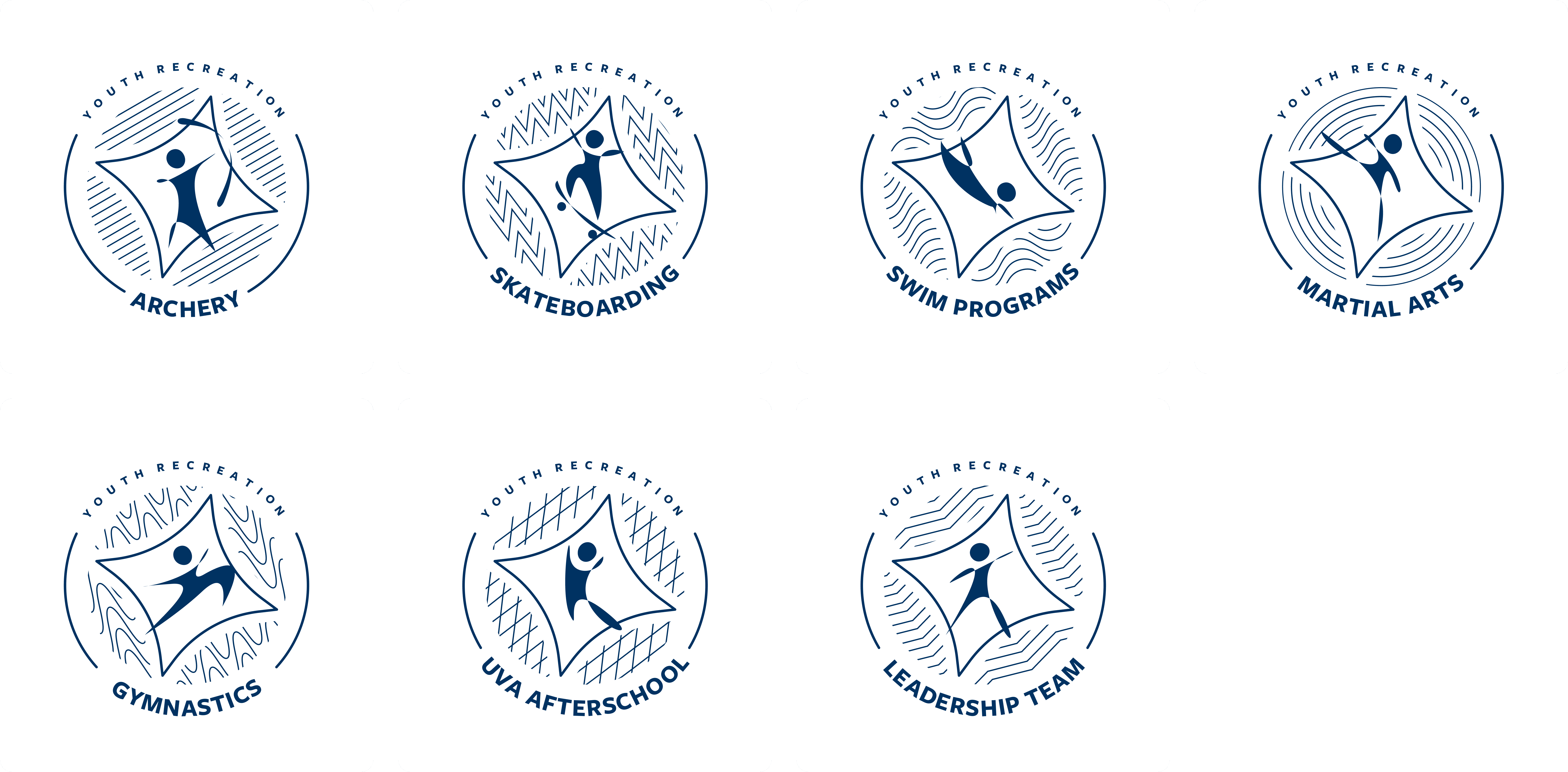
Monocolor Versions
Pattern language
Each sport also received a distinct pattern that extended the identity beyond the logo into textiles, backgrounds, and printed materials. The patterns were designed to communicate something true about each sport's character through shape and movement:







The pattern system gives designers flexibility – patterns can be used independently of the logo on apparel, banners, or social content while remaining visually connected to their sport.
Character illustrations
Each program also received a character illustration designed to convey the energy and movement of the sport while staying readable at small sizes. To decide on poses, I prioritized action and the highlights of each program over accuracy (a gymnast mid-tumble reads faster than a gymnast standing). The characters are built from the same star/sparkle shape as the logos, tying the illustration style back to the core identity system.
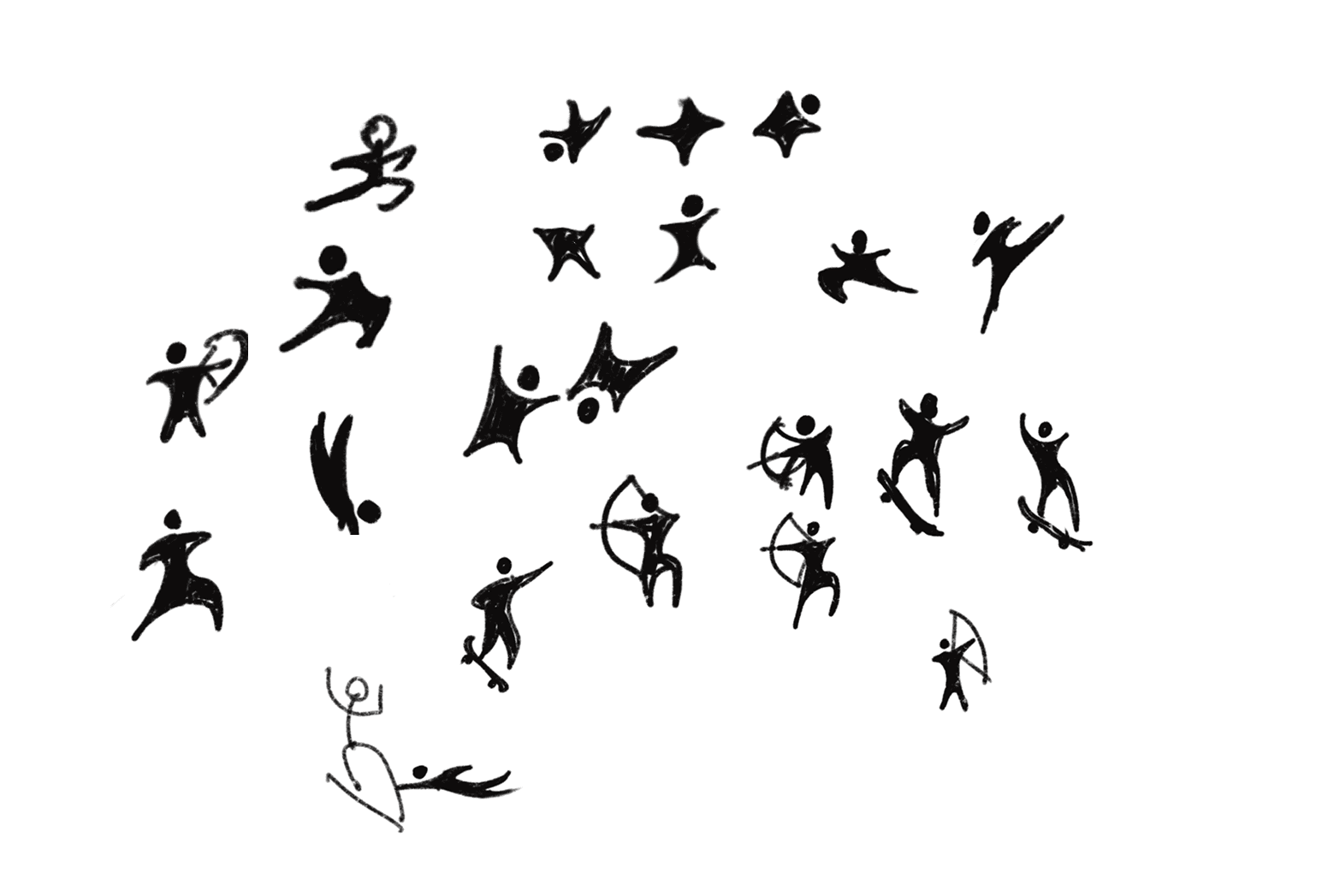
Character Sketches
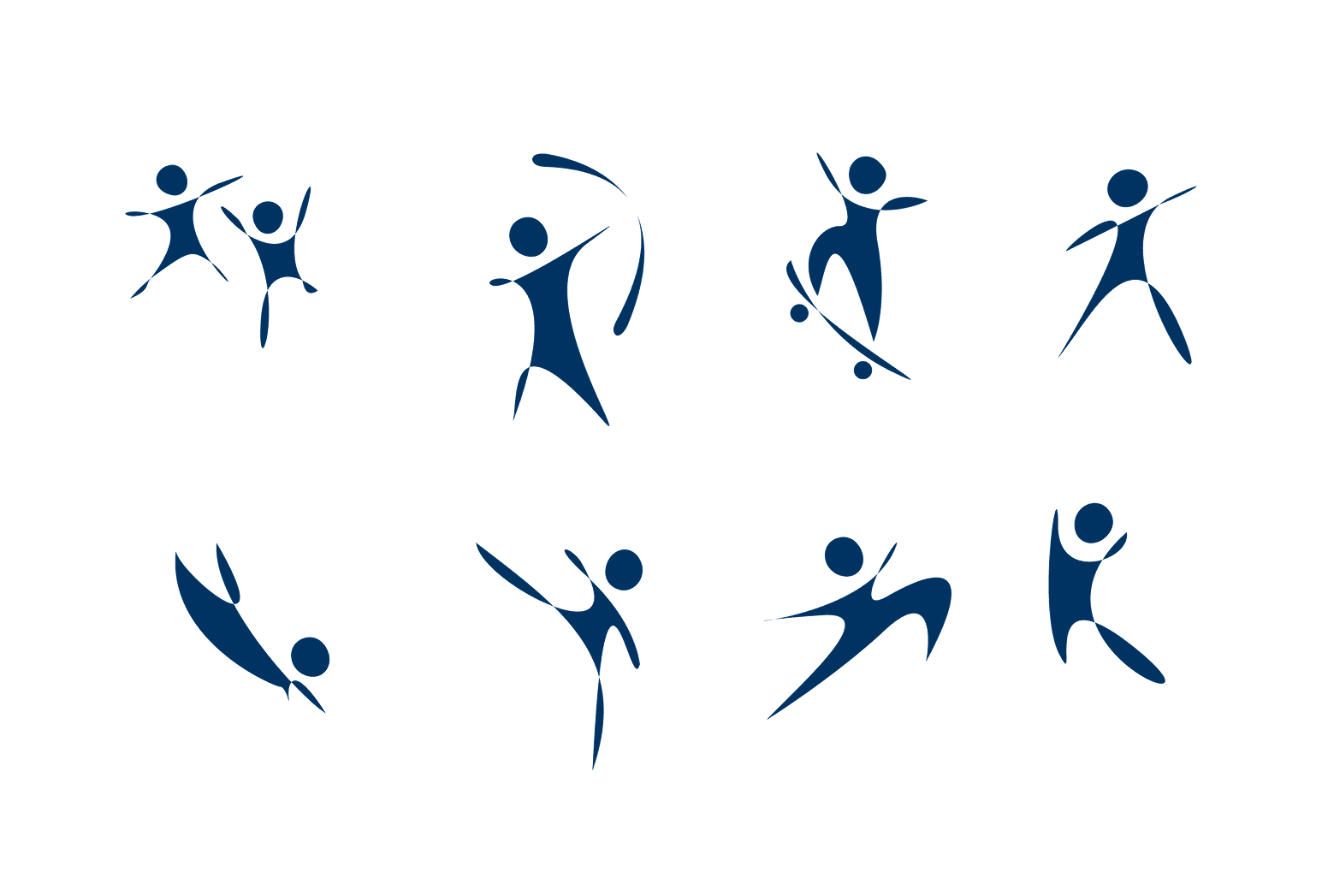
Finalized Illustrations

Patterns Constructed from the Character illustrations
Outcome
The completed system gave Youth Recreation something it hadn't had before: a visual identity that could grow with the program. New sports could be added by applying the same logo adaptation rules and pattern logic, without requiring a redesign of the whole system. Existing materials across print, apparel, and digital could be updated incrementally rather than all at once.
The reception within Berkeley RecWell was strong enough that I was asked to present the project as a case study to incoming new hires before I graduated, and that mattered more to me than any metric. It meant the work was not just visually successful, but was also legible and communicable.
"Angelina's work has assisted with creating a new brand identity on the Cal campus. Her work has always been in a timely manner and better than could be expected. She has new and fun ideas that pair well with the brand guidelines and identity.
I'm always impressed with her ideas and have so enjoyed working with her. Angelina was an employee that I could count on and I am sad to see her graduate. I wish she could come back and work for us in the future!"
– Liz Seal, Associate Director of Recreation & Wellbeing